Ishtartv.com – persecution.org
May 8, 2026
According to reporting by Lebanon’s National News Agency (NNA) last
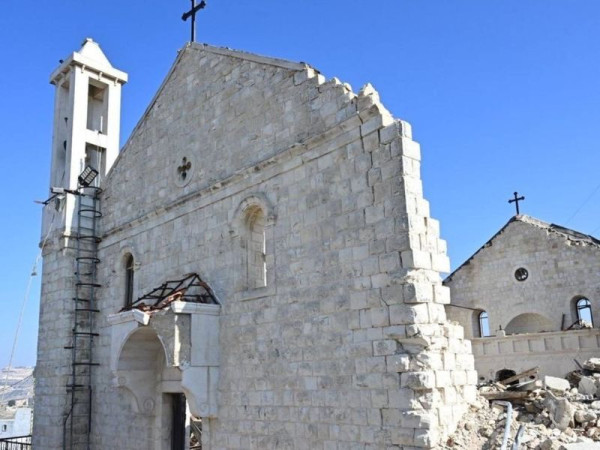
week, the Israeli military demolished a Catholic monastery and a nuns’ school
in a southern Lebanese border village.
The destruction of the monastery, considered “one of the most prominent
educational institutions in the region,” according to NNA, triggered renewed
alarm among Christian leaders. This incident, they said, highlights how
religious sites are increasingly being drawn into the destruction and
displacement caused by ongoing conflict along the Israel–Lebanon frontier.
Israeli forces reportedly used explosives and heavy machinery to destroy
the monastery complex operated by the Sisters of the Holy Savior in Yaroun, a
historically Christian town in the Bint Jbeil district close to Lebanon’s
southern border with Israel. The facility had served as both a convent and a
school, educating generations of students from surrounding communities and
functioning as a key local institution before the escalation of hostilities in
the region.
Church sources and local officials described the loss as both cultural
and humanitarian. Its destruction, they said, represents a significant blow to
the Christian presence in southern Lebanon at a time when many communities are
already displaced or unable to return home.
The demolition in Yaroun is part of a broader pattern of damage to
religious and civilian infrastructure in southern Lebanon during ongoing
military operations along the border. Reports indicate that multiple villages
in the region have experienced widespread destruction of homes, schools, and
places of worship as fighting between Israel and Hezbollah continues despite
intermittent ceasefire arrangements.
Christian Heritage Sites at Risk
The incident has intensified concern among church leaders across Lebanon
and the broader region, as additional reports of damage to Christian landmarks
continue to emerge. In recent months, other sites — including convents,
churches, and shrines — have been reported damaged or destroyed in southern
Lebanon, prompting appeals from Catholic and Orthodox authorities for
international protection of religious heritage.
Church representatives argue that even when military operations are
aimed at armed groups, the resulting destruction is increasingly affecting
civilian and religious infrastructure, complicating the already fragile
position of minority communities in border regions.
The concerns in Lebanon come alongside renewed warnings from church
authorities in Jerusalem, where the Greek Orthodox Patriarchate has recently
spoken out about what it describes as a troubling rise in incidents targeting
Christians and clergy in the Old City.
Reports of physical assaults and intimidation against clergy — including
an incident involving an Israeli nun who was beaten — have added to
mounting anxiety among local church communities. Religious leaders say these
events contribute to a broader sense of insecurity for Christians living in and
visiting the Holy City, particularly during periods of heightened political
tension.
Elsewhere, additional incidents have highlighted the vulnerability of
Christian symbols and sites. Reports from southern Lebanon and Israel have
documented damage to churches and religious statues during military activity
and unrest, including widely circulated footage of the destruction of
a statue of Jesus in a border village. This incident prompted internal
disciplinary action and public condemnation from Israeli officials.
At the same time, monitoring organizations have recorded several
physical attacks on individuals and property linked to Christian communities in
Israel and Jerusalem, further contributing to concerns among church leaders
that the region is experiencing a broader deterioration in protections for
religious minorities.
Fragile Environment for Historic Communities
These developments highlight the increasing pressure on Christian
communities across the Levant, where religious heritage sites and local
populations operate amid sustained conflict and political instability.
In Lebanon, the destruction of institutions such as the Yaroun monastery
underscores the broader humanitarian toll of the conflict and its impact on
historically diverse border communities. In Jerusalem, rising tensions around
access to holy sites and safety for clergy point to parallel challenges in
maintaining religious coexistence.
As hostilities continue to shape daily life across the region, church
leaders are calling for greater protection of religious sites and renewed
attention to the security of vulnerable communities whose presence predates
modern political divisions by centuries.
|