Ishtartv.com - rudaw.net
29 May 2026
ERBIL, Kurdistan Region -
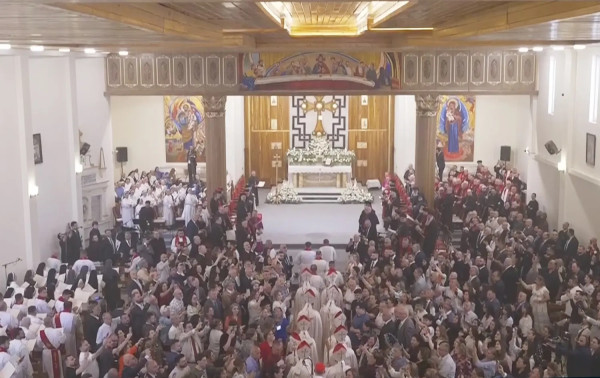
Patriarch Mar Paulus III Nona is set to formally assume office as the head of
the Chaldean Catholic Church in Iraq and worldwide during an inauguration
ceremony in Baghdad on Friday, expected to be attended by church leaders, clergy,
and Christian delegations from across Iraq and abroad.
The ceremony will be held at St.
Joseph Cathedral in the Iraqi capital, marking the second and final stage of
Patriarch Nona’s appointment after his election by the Synod of Chaldean
Bishops and confirmation by Pope Leo XIV.
Albert Hisham Naoum, director of
the Patriarchate's Media Office, told Rudaw that a number of Catholic church
leaders and priests will attend the event, alongside delegations from Lebanon
and Australia, where Patriarch Nona previously served as a senior cleric.
Christian delegations from
several Iraqi provinces and the Kurdistan Region will also participate,
particularly from Nineveh province, where the patriarch was born.
Patriarch Nona was elected during
a conclave of the Chaldean Synod held in Rome from April 9 to 12, following the
resignation of Cardinal Louis Raphael Sako in March after 13 years at the helm
of the church. Upon his election, he chose the patriarchal name Mar Paulus III.
Born in the Christian town of
Alqosh in Nineveh province in 1967, Patriarch Nona holds a doctorate in
theology. He served as Chaldean Archbishop of Mosul from 2010 to 2015 before
being appointed head of the Chaldean Catholic Eparchy of St. Thomas the Apostle
in Australia and New Zealand.
His tenure in Mosul coincided
with one of the darkest periods for Iraq's Christians. In 2014, the Islamic
State (ISIS) seized Mosul and large parts of the Nineveh Plains, forcing tens
of thousands of Christians to flee their homes. Patriarch Nona was among the
church leaders displaced by the offensive before relocating to Australia the
following year.
The Chaldean Catholic Church is
Iraq's largest Christian denomination and one of the oldest Eastern Catholic
churches, with significant communities in Iraq, the Kurdistan Region, North
America, Europe, and Australia. The church has faced decades of challenges
stemming from conflict, instability, and emigration, which have dramatically
reduced Iraq's Christian population.
|