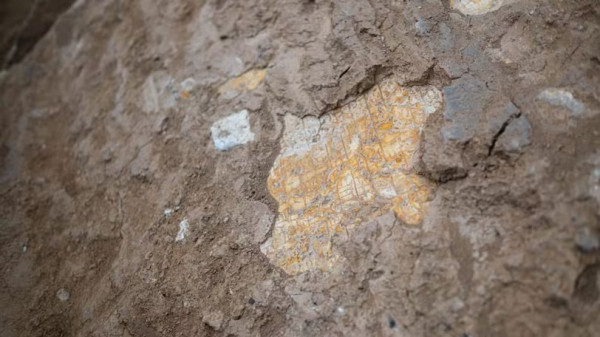
Archaeologists in Iraq’s Nineveh province have announced the discovery of a rare Assyrian stele. Photo: Iraqi Ministry of Culture
Ishtartv.com - thenationalnews.com
Sinan Mahmoud, June 25, 2026
Archaeologists in Iraq’s Nineveh province have announced the
discovery of a rare Assyrian stele dating to the reign of King Ashurbanipal,
shedding new light on the ancient capital’s urban achievements nearly 2,600
years ago.
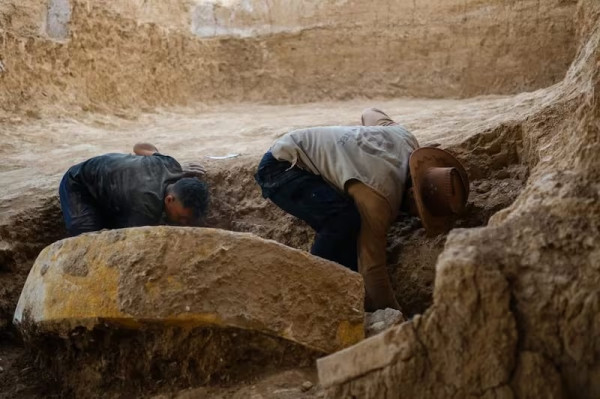
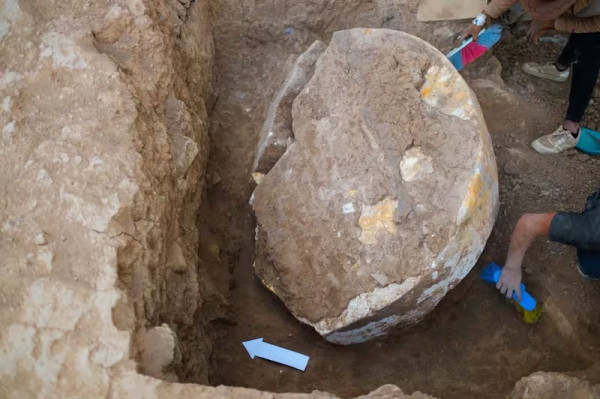
The Nineveh Department of Antiquities and Heritage said on Wednesday
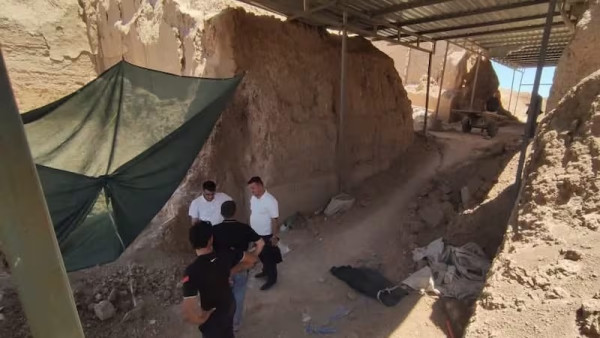
that the monument was uncovered at Shamash Gate on June 6 by a joint
Iraqi–American archaeological mission. The gate is a strategically important
entrance in the eastern fortifications of old Nineveh that suffered damage
during ISIS occupation between 2014 and 2017.
It is currently the focus of conservation and restoration efforts by the
University of Chicago's Institute for the Study of Ancient Cultures in
partnership with Iraqi and international researchers.
Archaeologist Ruwaid Muwaffaq said the stele commemorates the
construction projects carried out in Nineveh during Ashurbanipal’s rule from
668BC to 627BC.
“This discovery is a significant addition to the record of
archaeological finds that highlight the greatness of Assyrian civilisation and
its urban development,” Mr Muwaffaq.
He described the stele as “one of the most important artefacts that
chronicles the achievements of one of the Assyrian Empire’s greatest kings”.
The stele is two metres high and 1.55 metres wide, bearing relief
carvings and cuneiform inscriptions on two faces. The front depicts King
Ashurbanipal, while the reverse shows two smaller friezes of Assyrian kings.
The back also carries cuneiform text believed to document the king’s building
works in Nineveh and across the empire.
The artefact has been transferred to the department’s headquarters for
initial conservation, ahead of detailed study and publication of the findings.
Mosul’s scarred heritage
The discovery comes nearly a decade after Mosul, the capital of Nineveh,
was liberated from ISIS. During its occupation, the group systematically attacked
cultural heritage across northern Iraq as part of its ideological
campaign.
ISIS militants bulldozed parts of the ancient city of Nimrud, including
the Palace of Ashurnasirpal II, and blew up sections of Nineveh’s ancient
walls, including the Mashki and Adad Gates. In February 2015, the group
released a video showing the destruction of original Assyrian artefacts in the
Mosul Museum with sledgehammers and drills. The group also looted
archaeological sites across Nineveh and sold artefacts on the black market to
fund operations.
Return of archaeology after liberation
Since Mosul’s liberation in 2017, Iraqi authorities and international
partners have worked to document damage, recover looted items, and restart
excavations. Restoration projects have focused on the Old City, the Mosul
Museum and key gates of Nineveh, including the Shamash Gate.
The current Iraqi–American mission operates under this framework,
combining restoration of war-damaged sites with active archaeological work.
Officials say the stele was found during restoration works at sites affected by
the 2016-2017 battles.
Authorities could display the stele either at its original location or
in the planned Mosul Civilisation Museum, which is intended to show the city’s
layered history from Assyrian times through to the Islamic period.
Assyria’s legacy in Nineveh
Nineveh was the capital of the Neo-Assyrian Empire and one of the
largest cities of the ancient world. Under kings like Sennacherib and
Ashurbanipal, it became a centre of administration, military power and
scholarship. Ashurbanipal is famed for establishing one of the earliest known
libraries, amassing over 20,000 cuneiform tablets covering history, literature,
science and religion.
The stele’s inscriptions could provide further evidence of
Ashurbanipal’s building programmes, which included expanding city walls,
temples and palaces. Such monuments served both practical and propagandistic
purposes, broadcasting royal authority to subjects and foreign envoys.
For modern Iraq, the find is more than an archaeological milestone. It
is a reminder of Nineveh’s role as a cradle of civilisation and of Mosul’s
continuity as a cultural crossroads on the Tigris River.
“This discovery highlights the civilisational and urban prosperity that
Nineveh witnessed in the Assyrian era,” Mr Muwaffaq said. It strengthens
evidence that many of the city’s gates and historical sites contain royal
monuments and important constructions, he added.
The destruction was not only physical but symbolic – an attempt to erase the pre-Islamic history of the region and sever Iraqis from their Mesopotamian roots.
|