Ishtartv.com - clickpetroleoegas.com.br
Written by Ruth Rodrigues,
Published on 16/07/2026
Discover the Assyrian kings
who were erased from history by their successors. Archaeologists reveal ancient
secrets of the Neo-Assyrian Empire.
After nearly a century of
historiographical convictions, new archaeological findings
reveal that three monarchs were intentionally omitted from the official records
of the Neo-Assyrian Empire. The study, conducted by experts Eckart Frahm from
Yale University and Alexander Johannes Edmonds from the University of Münster,
challenges the idea of a continuous and flawless imperial lineage
By reexamining hundreds of
artifacts and ancient inscriptions, the researchers exposed political silencing
strategies that, for millennia, kept three Assyrian kings out of the history books.
The revelation, published in 2026
in the Journal of Cuneiform Studies, demonstrates how
successors sought to legitimize their own reigns by erasing the traces of
rivals or predecessors who had brief governments or came to power through
revolts.
Evidence of a policy of
forgetting
The attempt to erase the memory
of these leaders was not just a historical gap, but an active
effort to manipulate social memory.
Archaeologists found
clear evidence that names were scraped off monuments or replaced in official
records to hide the existence of these monarchs.
- In one inscription, the name of Shalmaneser was
discovered hidden under the name of Tiglath-Pileser III.
- Other texts present lines left blank, indicating
where a king’s name should be but was deliberately removed.
- The “official history” of the Neo-Assyrian Empire,
which served as a reference for generations, was constructed with
selective criteria of reign time and legitimacy, excluding figures
considered inconvenient.
Identifying the Rescued
Monarchs
Researchers were able to identify
the three rulers through a meticulous analysis of archaeological remnants and
fragmented mentions in period documents.
- Aššur-uballiṭ: Identified thanks to an
inscription about the repair of a silver ritual vessel dedicated to the
god Ashur. He is believed to have ruled between 913 and 912 BC.
- Tiglath-Pileser: A rebellious leader who took
the throne of Ashur in 763 BC during a period of political turmoil. His
existence was proven by royal land grant notes.
- Shalmaneser: Ruled between the end of 747 and
745 BC, being mentioned in the inscription of a high state official.
The Complexity of Power in
Ancient Assyria
Although the erasure was
effective for centuries, the identified Assyrian kings were not figures devoid
of support.
Archaeology shows that, to ascend
to the position of monarch, they relied on the support of key sectors of
Assyrian society, such as the army, the high clergy, and members of the ruling
class.
The fact that each of them
adopted traditional royal names upon assuming power demonstrates that, even in
times of civil conflicts and instability, lineage and the royal title held an
unquestionable symbolic value for maintaining authority.
The records of the Assyrian
Eponym Chronicle, which correlate these periods with events such as solar
eclipses — traditionally seen as omens of crisis by the Assyrians — reinforce
the image of an empire marked by rapid transformations and internal disputes
before 911 BC.
Now, the academic community
discusses the need to update the official lists of rulers to include these
names that, although they ruled for brief periods, are part of the complex
structure of Assyrian history.
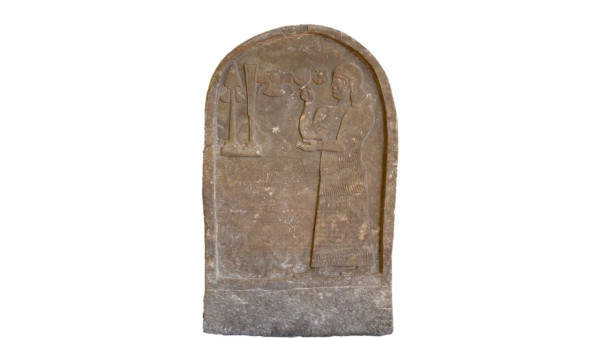
Stele of Bēl-Ḫarrān-bēlu-uṣur found in Tell ˁAbṭa. Image © Marie-Lan Nguyen/Wikimedia Commons/CC-BY 4.0.
|