Ishtartv.com - asianews.it
by Vladimir Rozanskji, July
27, 2026
An ancient collection of bronze
cups dating back over 2,600 years has been discovered at Karmir Blur. These
extraordinary artefacts are linked to the ancient kingdom of Urartu, which is
believed to correspond to the biblical Mount Ararat. These ancient dynasties
are regarded by the Armenian people as part of their national identity.
Yerevan (AsiaNews) – The largest
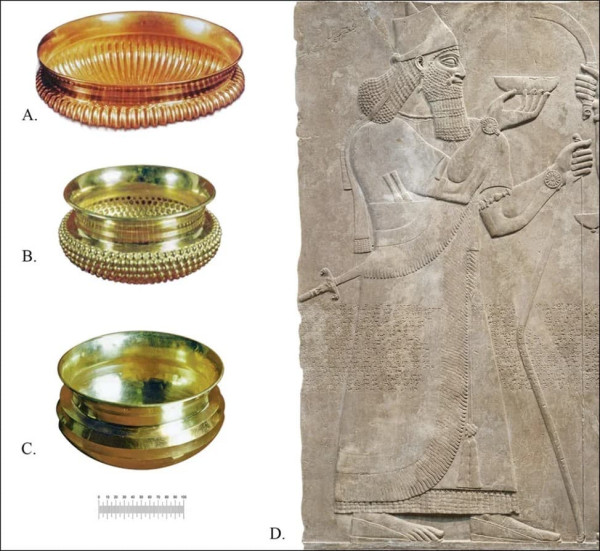
collection of cups from the Urartian period (between the 9th and 6th centuries
BC) has been discovered at Karmir Blur, near the Armenian capital Yerevan.
Scientists have uncovered depictions of lions, temples and cuneiform script on
the bronze cups of the Urartian kings, as reported in a feature by News-Armenia.
The bronze cups bearing the names of the Urartian kings may not only have been
utensils for the elite, but also a means of demonstrating power, divine
legitimacy and dynastic succession; this is the conclusion reached by the
authors of a new study.
The Kingdom of Urartu (Biainili in
Urartian) was an ancient kingdom in Armenia, situated between Asia Minor,
Mesopotamia and the Caucasus, centred around Lake Van – now in eastern Turkey –
and therefore also referred to as the ‘Kingdom of Van’, which lasted from 860
to 585 BC. The name Urartu corresponds to the biblical Ararat, and was given to
the kingdom by its most bitter enemies to the south, the Assyrians; it derives
from the Akkadian dialect and means ‘Land of Mountains’.
The indigenous name was Biainili,
which was the original name of Lake Van. Some scholars believe that the Ararat
of the Old Testament is a variant of the Akkadian Urartu: indeed, Mount Ararat
was situated right within Urartian territory, some 120 km north of its ancient
capital. It should also be noted that in the Old Testament, ‘Ararat’ was also
used to refer to an ancient kingdom situated to the north of Mesopotamia;
similarly, the earliest Armenian chronicles from the 5th–7th centuries state
that the original name of Armenia was ‘land of Ararad’. The
variations may derive from the Armenian Ayrarat, which means ‘land
of the brave’ and ‘land of the Armenians’.
Archaeologists have studied over
100 vases dating from the period between the late 9th and early 7th centuries
BC, associated with rulers such as Sarduri I and kings named Rusa. The largest
collection was discovered at Karmir-Blur, on the site of the ancient Urartian
city and fortress of Teišebaini in Yerevan, as reported by Arkeonews,
citing a study published in the journal Antiquity. The inner
surface of the bowls is engraved with short cuneiform inscriptions listing the
names of the rulers; the researchers have reconstructed the changes in the
inscriptions, engraving techniques and royal symbolism.
The earliest examples reflect a
strong Assyrian influence, but over time the Urartian craftsmen developed their
own tradition. The vessels began to feature images of a roaring lion’s head and
a tower surmounted by a spear, which the researchers interpret as a Susi temple.
The lion symbolised strength and royal power, whilst the temple associated the
ruler with sacred authority. The authors of the study suggest that the bowls
may have been used at court, during ceremonies or religious rites, and their
concentration at Karmir-Blur may have been an attempt to preserve the memory of
the royal dynasty during the period of instability and in the final decades of
Urartu’s existence.
According to the researchers,
these vessels served as material vehicles of royal ideology: the combination of
the sovereign’s name, cuneiform inscriptions, symbols, precious metals and
high-quality craftsmanship transformed them into distinctive statements of
power and dynastic succession. In Armenia, these ancient artefacts arouse great
interest not only among scholars but also amongst the general population, who
regard their national identity as rooted precisely in the existence of ancient
kingdoms such as that of the Urartu, the ancestors of the Armenians across vast
territories now divided into various nations.
|