URUMQI, China (IshtarTV.com) -
Dr. Erica Hunter, an academic researcher at Cambridge University, has highlighted the profound significance of recent archaeological discoveries in the Xinjiang region of northwestern China, which have revealed rare Syriac manuscripts documenting the history of the "Church of the East" and its cultural and religious interactions along the ancient Silk Road.
Quoting a detailed report by the Chinese news agency "Xinhua" monitored by "IshtarTV.com," Dr. Hunter, an internationally recognized authority on Syriac texts and the relics of Eastern Christianity, presented her latest research to more than 180 scholars from 15 countries during a recent international symposium on Silk Road studies held in the Chinese city of Urumqi.
The Chinese agency reported that the British researcher's focus is primarily centered on the manuscripts discovered in the historic "Xipang" monastery in the city of Turpan. This was one of the monasteries of the Church of the East, known in Chinese history as "Jingjiao" or the "Luminous Religion."
Roots of Eastern Christianity in China
In an academic context, the historical roots of the Church of the East in China date back to the 7th century AD. According to historical and archaeological sources, a Syriac monk named "Alopen" arrived in the Chinese capital at the time (present-day Xi'an) in 635 AD, where he was received by the Tang Dynasty emperor, who permitted him to build churches and translate sacred texts.
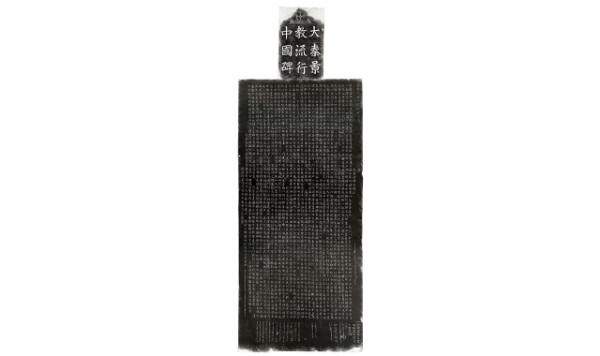
This exceptional, centuries-long presence is documented in both Chinese and Syriac on the famous "Xi'an Stele of the Church of the East." Erected in 781 AD, the stele bears witness to the spread of Christian monastic and mercantile communities that flourished across the villages and cities along the Silk Road, leading up to later periods when they thrived once again in Turpan.
Recent Excavations Reassemble History
"Xinhua" explained in its report that German expeditions in the early 20th century had extracted parts of these Syriac manuscripts and transferred them to Berlin. However, China's Sun Yat-sen University, in collaboration with local archaeological institutes, conducted meticulous scientific excavations between 2021 and 2023 at the very same monastery site.
According to the same source, these recent excavations resulted in the unearthing of large quantities of Syriac documents and texts of the Church of the East, alongside Daoist and Buddhist books, confirming a remarkable state of cultural and religious intermingling and coexistence in the region.
In her interview with the Chinese agency, Dr. Hunter affirmed her relentless pursuit to connect the newly discovered manuscripts with those preserved in Germany, likening the scattered parts to "the two arms of a person." She stated, "The full picture of the Silk Road can only be pieced together by reconnecting what history severed," praising the Chinese academic openness that allows researchers from all over the world to extract new knowledge about this shared human heritage.